
In naturopathic medicine, health is seen as an interconnected ecosystem—where nutrition, lifestyle, and physiology harmonise to support true wellness. Among the most foundational nutrients are the essential fatty acids, particularly the long-chain omega-3s: EPA (eicosapentaenoic acid) and DHA (docosahexaenoic acid). As the human body cannot produce them efficiently, they must be obtained through diet or supplementation.¹
What Are EPA & DHA — And Why Are They Essential?
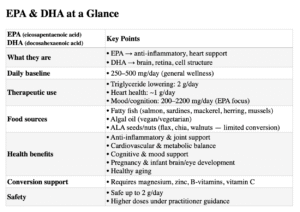
EPA and DHA are polyunsaturated omega-3 fats. While plant-derived ALA (alpha-linolenic acid) can technically be converted into EPA and DHA, conversion rates are poor (men ~8%, women ~21%).²
- EPA influences inflammatory pathways and cardiovascular signalling.
- DHA is a critical structural component of neuronal and retinal membranes.³
Together, they:
- Support cell membrane fluidity.
- Reduce inflammatory mediators such as leukotrienes and prostaglandins.
- Aid brain plasticity.
- Optimise cognitive and visual function. ⁴
Key Health Benefits
- Inflammation regulation & joint health: EPA helps regulate inflammation, beneficial in arthritis, autoimmune, and cardiovascular concerns.⁵
- Heart and metabolic support: Omega-3s lower triglycerides, support blood pressure, and improve endothelial function. Higher doses (3–4 g/day) reduce triglycerides significantly, while ~1 g/day provides general heart benefits.⁶
- Cognitive & mood support: DHA maintains brain structure; EPA supports mood regulation and may help reduce symptoms of depression and anxiety.⁷
- Pregnancy & infant development: DHA is essential for foetal brain and eye development. Supplementation (200–800 mg DHA/day) reduces preterm birth risk and supports neurological growth.⁸
- Healthy aging: The DO-HEALTH trial (777 participants, 3 years) showed 1 g/day omega-3 slowed markers of biological aging, with additional benefits when combined with vitamin D and exercise. ⁹
Daily Intake — How Much Do You Need?
- General wellness: 250–500 mg EPA + DHA daily, consistent with EFSA, AHA, NHMRC, and Australian guidelines.¹⁰
- Cardiovascular or high triglycerides: 1,000–4,000 mg/day (4 g/day for triglyceride lowering).¹¹
- Mood, inflammation, cognition: 200–2,200 mg/day, often with higher EPA focus.¹² ¹³
- Safety: Generally safe up to 2 g/day.⁶
- Australian intake: Average ~250–500 mg/day, below recommended levels.¹⁰
Best Sources of EPA & DHA
Marine-based:
- Fatty fish (per 100 g cooked): salmon (1.1–1.9 g), mackerel (≈1.2 g), sardines, anchovies, herring (≈1.1–1.3 g), oysters, mussels, barramundi, tuna, shellfish.¹⁴
Plant-based (limited conversion):
- Algal oil supplements: reliable vegan/vegetarian EPA+DHA source.¹⁵
- ALA-rich foods: flaxseed, chia, hemp, walnuts (poor conversion).¹⁶
Practical Tips for Boosting Intake
- Eat fatty fish 2–3 times weekly (choose low-mercury options like sardines and anchovies).
- Use algal oil if plant-based.
- Include nuts and seeds for ALA support, but don’t rely solely on them for EPA/DHA.
- Support conversion with cofactor nutrients (magnesium, zinc, B-vitamins, vitamin C).
- Reduce omega-6 intake (processed seed oils, ultra-processed foods) to improve the omega-6:omega-3 ratio.
Naturopathic Nutritional Insight
From a naturopathic perspective, ensuring sufficient EPA and DHA supports the body’s natural healing rhythms. These essential fatty acids:
- Promote anti-inflammatory balance and vascular resilience.
- Nourish brain and retinal function.
- Aid mood regulation and cognitive sharpness.
- Support healthy aging and immune function.
Start with ~500 mg/day from diet for maintenance, increasing toward 1–2 g/day for targeted support (inflammation, cardiovascular health, recovery, or mood). Work with a naturopath to individualise dose and source (fish vs. algal) based on your health picture and preferences.
Final Thoughts
EPA and DHA are foundational nutrients in naturopathic nutrition—supporting the brain, heart, eyes, inflammation balance, and overall vitality. Including them through wholefoods or thoughtful supplementation can foster sustainable, holistic wellness.
Always consult a qualified naturopath or healthcare provider before beginning higher-dose supplementation, particularly if you are managing chronic health conditions or taking medication.
References
- National Institutes of Health. (2019). Omega-3 fatty acids: Fact sheet for health professionals.
- Elgar, K. (2022). EPA/DHA: A review of clinical use and efficacy. Nutr. Med. J., 2, 97–132.
- Von Schacky, C. (2021). Importance of EPA and DHA blood levels in brain structure and function. Nutrients, 13(1074).
- Troesch, B., Eggersdorfer, M., Laviano, A., et al. (2020). Expert opinion on benefits of long-chain omega-3 fatty acids in aging and clinical nutrition. Nutrients, 12(9), 2555.
- Krupa, K. N., Fritz, K., & Parmar, M. (2024). Omega-3 fatty acids. In StatPearls [Internet]. StatPearls Publishing.
- Skulas-Ray, A. C., Wilson, P. W., Harris, W. S., et al. (2019). Omega-3 fatty acids for the management of hypertriglyceridemia: A science advisory from the American Heart Association. Circulation, 140(12), e673–e691.
- Bozzatello, P., Brignolo, E., De Grandi, E., & Bellino, S. (2016). Supplementation with omega-3 fatty acids in psychiatric disorders: A review. Journal of Clinical Medicine, 5(8), 67.
- Greenberg, J. A., Bell, S. J., & Van Ausdal, W. (2008). Omega-3 fatty acid supplementation during pregnancy. Reviews in Obstetrics and Gynecology, 1(4), 162.
- Bischoff-Ferrari, H. A., Gängler, S., Wieczorek, M., et al. (2025). Vitamin D, omega-3 and exercise on DNA methylation clocks of aging in older adults: The DO-HEALTH trial. Nature Aging, 5(3), 376–385.
- National Health and Medical Research Council. (2025). Fats: Total fat & fatty acids. Eat for Health. https://www.eatforhealth.gov.au
- Heart Foundation. (2025). Omega fats and heart health. https://www.heartfoundation.org.au/healthy-living/healthy-eating/omega-3-omega-6-heart-health
- Dyall, S. C. (2015). Long-chain omega-3 fatty acids and the brain. Frontiers in Aging Neuroscience, 7, 52.
- Sublette, M. E., Ellis, S. P., Geant, A. L., & Mann, J. J. (2011). Meta-analysis of EPA in clinical trials in depression. Journal of Clinical Psychiatry, 72(12), 11703.
- Heart Foundation. (2025). You’re probably not eating enough fish – here’s what you should do.https://www.heartfoundation.org.au/blog/not-eating-enough-fish
- McCowen, K. C., Ling, P. R., Decker, E., et al. (2010). Omega-3 supplementation using fortified yogurt in healthy volunteers. Nutrition in Clinical Practice, 25(6), 641–645.
- Craig, W. J., Mangels, A. R., Fresán, U., et al. (2021). The safe and effective use of plant-based diets with guidelines for health professionals. Nutrients, 13(11), 4144.